Advanced Fluid Mechanics 2: The Navier-Stokes Equations for Viscous Flows
$0.10
View product
Massachusetts Institute of Technology Courses
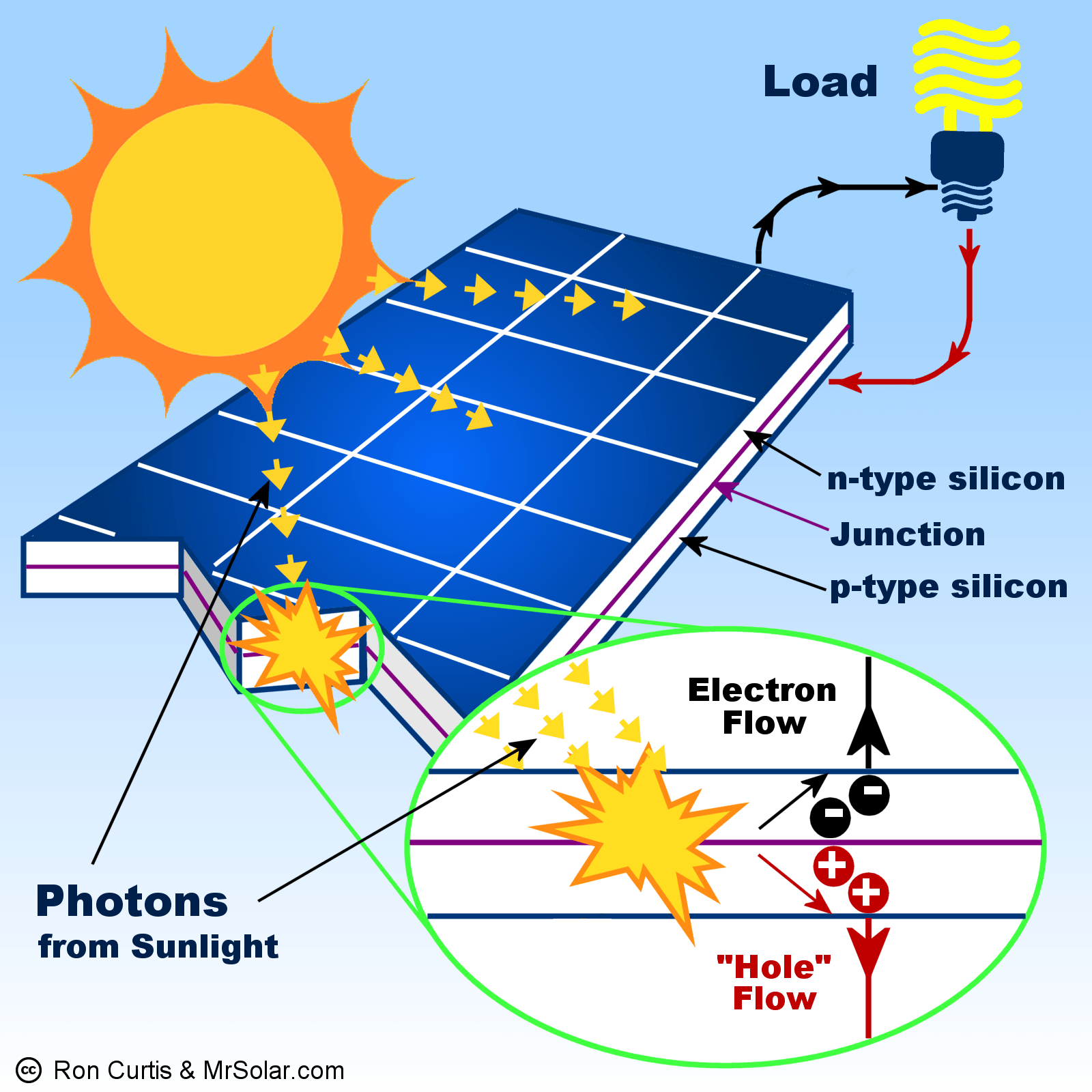
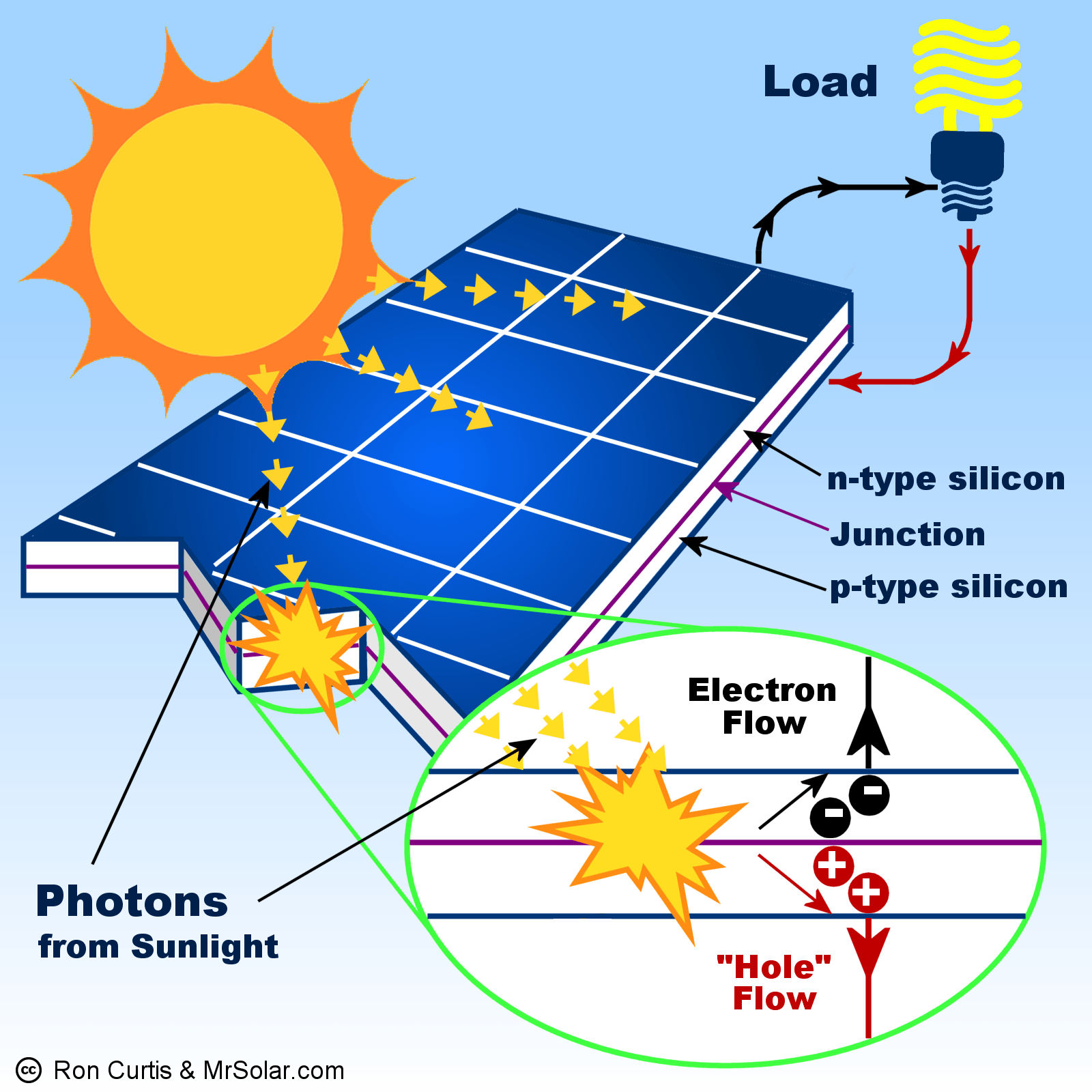
Fundamentals of photoelectric conversion: charge excitation, conduction, separation, and collection. Lectures cover commercial and emerging photovoltaic technologies and cross-cutting themes, including conversion efficiencies, loss mechanisms, characteriza
SGD 0.10
Continue to purchaseCondition: New
Authentic product
Fundamentals of photoelectric conversion: charge excitation, conduction, separation, and collection. Lectures cover commercial and emerging photovoltaic technologies and cross-cutting themes, including conversion efficiencies, loss mechanisms, characterization, manufacturing, systems, reliability, life-cycle analysis, risk analysis, and technology evolution in the context of markets, policies, society, and environment.
This course is one of many OCW Energy Courses, and it is an elective subject in MIT’s undergraduate Energy Studies Minor. This Institute–wide program complements the deep expertise obtained in any major with a broad understanding of the interlinked realms of science, technology, and social sciences as they relate to energy and associated environmental challenges.
Lectures: 2 sessions / week, 1.5 hours / session
Recitations: 1 session / week, 1 hour / session
In this course, you will learn about the fundamentals of photoelectric conversion: charge excitation, conduction, separation, and collection. You will become familiar with commercial and emerging photovoltaic (PV) technologies and various cross-cutting themes in PV: conversion efficiencies, loss mechanisms, characterization, manufacturing, systems, reliability, life-cycle analysis, and risk analysis. Other topics covered include photovoltaic technology evolution in the context of markets, policies, society, and environment.
By the year 2030, several hundred gigawatts of power must be generated from low-carbon sources to cap atmospheric CO2 concentrations at levels deemed “lower-risk” by the current scientific consensus. The necessity to develop low-carbon energy sources represents not only an awesome technological and engineering challenge, but also an equally large economic opportunity in a trillion-dollar energy market.
Students will learn how solar cells convert light into electricity, how solar cells are manufactured, how solar cells are evaluated, what technologies are currently on the market, and how to evaluate the risk and potential of existing and emerging solar cell technologies. We examine the potential & drawbacks of currently manufactured technologies (single- and multicrystalline silicon, CdTe, CIGS, CPV), as well as pre-commercial technologies (organics, biomimetic, organic / inorganic hybrid, and nanostructure-based solar cells). Hands-on laboratory sessions explore how a solar cell works in practice. We will learn how to enhance solar cell performance and reduce cost, and the major hurdles–technological, economic, and political–towards widespread adoption. Students will apply this knowledge towards developing a class project on the solar-related topic of their choosing.
Description: Learning objectives. Organization (lectures, labs, projects, recitations). Expectations & deliverables: grad & undergrad.
Solar technology framework. Abridged PV history and status quo. Challenges and opportunities toward widescale PV adoption. Solar energy conversion technologies (electric, thermal, chemical).
Instructor: Prof. Tonio Buonassisi
Description: Quantify magnitude and nature of solar resource. Atmospheric absorption, variability (geographical, seasonal, diurnal, weather-related). Power vs. energy; capacity factor. Issues with non-dispatchability. Direct and diffuse radiation, standards for insolation. Spectral quality. Measurement of insolation.
Instructor: Prof. Tonio Buonassisi
Description: Photon interactions with matter. Optical losses in solar cells. Photon management strategies in PV devices (anti-reflection coatings, plasmonics, texturization, etc.)
Instructor: Prof. Tonio Buonassisi
Description: Description of band gap and optical charge excitation in semiconductors. How a band gap determines maximum theoretical efficiency. Thermalization losses.
Instructor: Prof. Tonio Buonassisi
Description: Doping a semiconductor. Explanation of drift, diffusion, and illumination current. Derivation of diode equation.
Instructor: Prof. Tonio Buonassisi
Description: Solar cell operation from an energy diagram (chemical potential) perspective. Intro to solar cell parameters (e.g., short-circuit current, open-circuit voltage, fill factor). Equivalent circuits.
Initiate class projects: describe existing ideas and provide opportunity to pitch new ideas.
Instructor: Prof. Tonio Buonassisi
Description: Density of occupied and unoccupied electronic states. Fermi Energy defined as chemical potential. Dispersion of electronic states.
Instructor: Prof. Tonio Buonassisi
Description: Photogenerated carrier concentrations; carrier lifetimes and recombination mechanisms. Material properties affecting device performance: minority carrier diffusion length, mobility (band conduction vs. dispersive hopping), and lifetime.
Instructor: Joseph T. Sullivan
Description: Schottky & Ohmic contacts. Importance of band alignment. Series and shunt resistance. Solar cell device architectures. Common limitations of efficiency, short-circuit current, fill factor, open-circuit voltage. Measurement of quantum efficiency, solar cell efficiency.
Instructor: Prof. Tonio Buonassisi
Description: Crystalline silicon solar cells. Feedstock: silicon refining, Siemens, fluidized bed reactor, metallurgical route, novel concepts. Crystal growth: ingot silicon.
Instructor: Prof. Tonio Buonassisi
Description: Ribbon and sheet silicon. Wafering. Cell fabrication: methods, architectures, concepts. state of the art. Efficiency loss mechanisms. Emerging trends, cutting-edge technology. Role of innovation.
Instructor: Prof. Tonio Buonassisi
Description: Thin film advantages and disadvantages. Precursors. Deposition processes and technologies. Other technologies: concentrator devices and materials, heterojunction devices, photovoltaic thermal. Efficiency loss mechanisms of commercial thin-film devices. CdTe (cadmimum telluride) and its environmental issue.
Instructor: Prof. Tonio Buonassisi
Description: Other thin film technologies: amorphous silicon, copper indium gallium diselenide (CIGS). Resource abundance, toxicity.
First in-class debate: Cadmium Telluride: A Technology of the Future, or Red Herring?
Instructor: Prof. Tonio Buonassisi
Description: Theoretical efficiency limits. Materials and device-related efficiency loss mechanisms. Simulation of solar cell performance. Optical losses, recombination losses (and photon recycling), surface recombination velocity, series and parallel resistance (shunts). Band offset losses (both internal junctions and external contacts). Contact-related losses.
Second in-class debate: Elemental Resource Abundance: Engineering Issue, Political Issues, or Non-Issue?
Instructor: Prof. Tonio Buonassisi
Description: Performance in the field: temperature, shading, and mismatch. Third generation solar cells: intermediate band materials, novel thin film materials, multiband semiconductors, hot carrier devices, spectrum splitting.
Instructor: Joseph T. Sullivan
Description: Classification, function, and deliverables of solar cell characterization. JSC loss measurements: optical reflection, spectral response, minority character diffusion length. FF & VOC loss measurements: IV curves, series resistance (contact & sheet) , shunt resistance (lock-in thermography), electroluminescence.
Instructor: Prof. Tonio Buonassisi
Description: Module manufacturing: encapsulation materials, availability, trends. Systems: Grid-tied and stand-alone, tracking and non-tracking. System components, including balance of systems components. Design criteria, tradeoffs, costs. Building integration, BIPV. Scaling, and power grid integration. Appropriate technology selection. Life cycle analysis. Failure: failure modes in stationary and tracking systems, accelerated testing, field testing, service and warranty contracts. Fire safety.
Instructor: Prof. Tonio Buonassisi
Description: Cost: Building a cost model, key drivers of cost, substitution economics. Manufacturing: Environments, models, operations, process yield, handling. Predicting shortages and bottlenecks. Scaling to multi-GWs.
Instructor: Prof. Tonio Buonassisi
Description: Price and Markets: What sets price (and profit), energy future and overview of renewable energy sources, economics and market dynamics. Fluctuations in supply and demand, drivers for oversupply/undersupply conditions, and what this means for profits. Subsidies: Why subsidize? How much to subsidize? Role of PV in the global energy market.
Instructor: Prof. Tonio Buonassisi
Description: Innovation as a driver for PV cost reduction, learning curve. The PV technology life cycle, and differences in the US, Japanese, German, and Chinese models. How to apply what you’ve learned in this course to evaluate potential PV innovations.
Instructor: Prof. Tonio Buonassisi