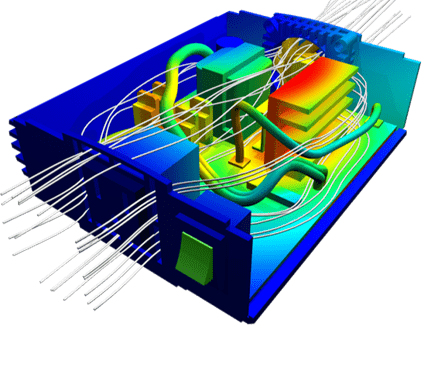
Advanced Fluid Mechanics 2: The Navier-Stokes Equations for Viscous Flows
$0.10
View product
Massachusetts Institute of Technology Courses
All around us, engineers are creating materials whose properties are exactly tailored to their purpose. This course is the second of three in a series of mechanics courses from the Department of Materials Science and Engineering at MIT. Taken together, the
$0.10
Continue to purchaseCondition: New
Authentic product
All around us, engineers are creating materials whose properties are exactly tailored to their purpose. This course is the second of three in a series of mechanics courses from the Department of Materials Science and Engineering at MIT. Taken together, these courses provide similar content to the MIT subject 3.032: Mechanical Behavior of Materials.
The 3.032x series provides an introduction to the mechanical behavior of materials, from both the continuum and atomistic points of view. At the continuum level, we learn how forces and displacements translate into stress and strain distributions within the material. At the atomistic level, we learn the mechanisms that control the mechanical properties of materials. Examples are drawn from metals, ceramics, glasses, polymers, biomaterials, composites and cellular materials.
Part 1 covers stress-strain behavior, topics in linear elasticity and the atomic basis for linear elasticity, and composite materials.
Part 2 covers stress transformations, beam bending, column buckling, and cellular materials.
Part 3 covers viscoelasticity (behavior intermediate to that of an elastic solid and that of a viscous fluid), plasticity (permanent deformation), creep in crystalline materials (time dependent behavior), brittle fracture (rapid crack propagation) and fatigue (failure due to repeated loading of a material).
Week 1: Equivalent stresses for varying orientations Principal stresses, maximum shear stress Mohr’s circles
Week 2: Stresses in beams Shear and bending moment diagrams in beams Strain energy
Week 3: Beam deflection Column buckling Cellular solids
Week 4: Final Quiz

Matoula S. Salapatas Professor of Materials Science and Engineering at MIT

Lecturer & Digital Learning Scientist at Massachusetts Institute of Technology